
Trichogramma – for plant protection
From 7,50 €
- Controls apple weevil and other pests in the garden and greenhouse
- Safe for humans, animals, nature
- Also authorised for use on organic farms
To get free shipping add 50,00 € to your cart! Trichogramma can be ordered and purchased by calling 27774435.

Trichogramma, or embryophagum Hartig, is a biological Class 3 plant protection product used to control various pests, including apple, plum, deciduous tree, ash, rose leaf, hawthorn, oak, pine shoot, spider mite, pea, cabbage white, cabbage moth, turnip white, whitefly, cherry fruit fly, pine looper, pine processionary, pine shoot moth, sawfly, and approximately 90 other pest species.
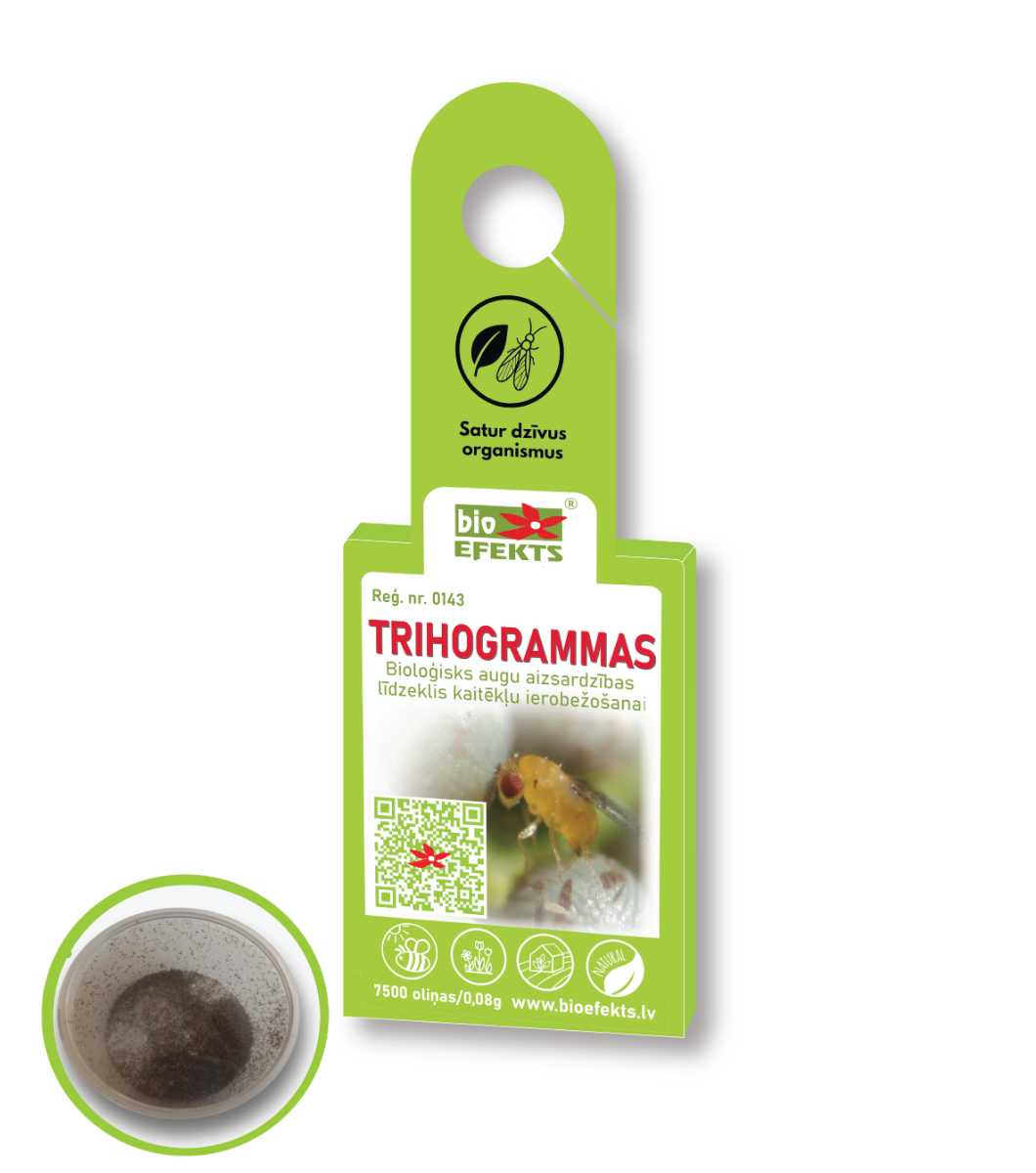
Mode of action: Adult females feed on nectar, move within a radius of about 20m, and lay their eggs inside pest eggs. One female lays 50-200 eggs. The hatched larvae feed on the contents of the parasitized eggs, preventing pest development and spread. Depending on weather conditions, Trichogramma can travel 15-20m. The parasitic wasps overwinter as mature larvae inside various pest eggs. In spring, the Trichogramma concentration in the garden may be insufficient to control pest infestations, so they are reintroduced into the garden when pests emerge and lay their eggs. The lifespan of the parasitic wasp is 10-11 days, after which the next generation begins its work. The plastic container holds 1,500 Trichogramma eggs; the cardboard package contains 7,500 Trichogramma eggs. HANG THE UNOPENED CARDBOARD PACKAGE IN PLANTS IN THE GARDEN!
Conditions favourable for development: temperature 10-25°C, humidity 75-80%, light, but not direct sunlight.
Conditions unfavourable for development: low temperatures, chemicals, pesticides, tobacco smoke, cosmetics and other strong odours. Do not use chemical plant protection products or substances with pungent odours in treated areas for 5 days before and 5 days after the release of Trichogramma.
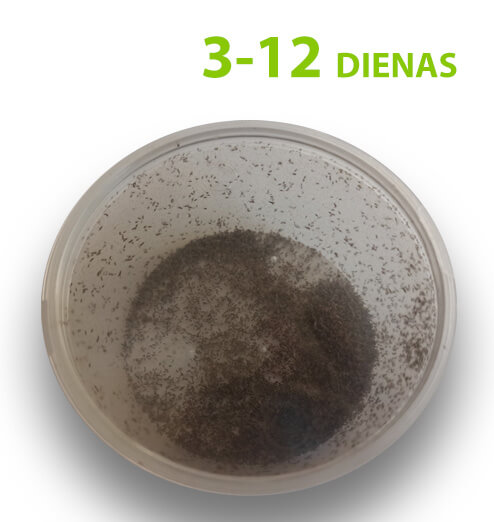
Important! Trichogramma are very small, less than 1mm long, so it is not always easy to see if Trichogrammas have already hatched, often resembling simple, small, black dots. If you hold the egg dish on a white sheet of paper, it will be much easier to see when the ‘black moving dots’ start to appear and the Trichogramma has hatched.
The fertiliser is authorised for use in organic farming in accordance with European Commission Regulation 2021/1165.
Dosage:
In households, one Trichogramma pack for 5-6 adult trees per release, for peas, raspberries, cabbages and other low plants 1 container per 300 m², in greenhouses 1 container per 60 m².
One cardboard package is sufficient for 2-3 mature trees per release, or for peas, raspberries, cabbage, and other low-growing plants, 1 package per 150 m², and in a greenhouse, per 30 m².
In production gardens, raspberries, berry bushes, cabbage and pea fields, orchards, conifers - 1,5 g/ha or 10 packets at first release and 1 g/ha or 7 packets at second release.
Use above the specified Dosage does not cause harm to plants, humans, animals or the environment and does not result in resistance.
Expiry date:
Plastic container – release insects into the garden immediately after hatching; not suitable for storage at home.
Cardboard package – hang in plants in the garden immediately after purchase. If ordering delivery via parcel locker – collect immediately after receiving the SMS and hang in plants in the garden.
When to let Trichogramma into the garden:
| Culturaug | Release period |
| In the yard, garden, coppice | In the first warmth of spring, when moths of all kinds lay their eggs, later entangling plants with nets |
| Fruit and berry orchards | Three times a season – at the beginning of flowering, June and early August |
| Peas | Bud formation at the beginning and during flowering |
| Cabbage | Early head formation and during pest emergence |
| Raspberries | Bud formation at the beginning and during flowering |
| Conifers | Late May during pest emergence and late July or early August, depending on weather conditions |
| For Roses, boxwood, shrubs | Late May, early June and early August |
Use
What to do with the bowl I bought?
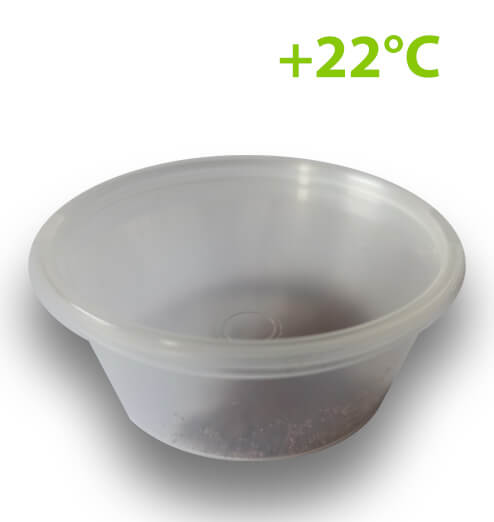
In spring, when nights are still cool, we recommend Trichogramma in a plastic container – place the unopened Trichogramma container indoors, for example, on a table or shelf, but not in direct sunlight. The hatching process can take 3-12 days, depending on room temperature, weather conditions, and other natural rhythms. When the Trichogramma hatch, they will crawl around the container but will be very small and difficult to see. Place a white sheet of paper under the container to make the parasitic wasps easier to spot, and check the container several times a day. After hatching, the container will not be empty; some debris will remain at the bottom. Once the parasitic wasps have emerged, take them to the garden during the day, open the container near a fruit tree, slide in the new leaves, hold for 10 seconds, and then release the branch. Repeat this for each tree in several places at different heights. When moving to the next tree, close the container partially. Release Trichogramma until early evening so they have time to disperse before nightfall; a windless, sunny, and warm day is preferable. Trichogramma can also be released in cool and humid weather, provided it does not rain within an hour of release, allowing them to find shelter and establish themselves in the garden.
IN SUMMER – when the weather is warm, we recommend using cardboard packages – hang them in the crown of fruit trees closer to the trunk or in plants 15-20cm from the ground.
In summer, plastic containers with Trichogramma eggs can also be used – make SMALL holes in the sides of the container with a needle to prevent ants from entering, and place them in fruit tree branches or another shaded spot in the garden, allowing them to hatch and fly out on their own. They will move to other trees within a 15-20 meter radius.
Once released, trichogrammas should be re-released after 6-7 days in warm weather, and once a month thereafter, to control pests early in their development without damaging the plants.In pea, raspberry, and shrub plantations, trichogrammas are released in a similar way to fruit trees.
In greenhouses during summer, conditions are usually optimal for Trichogramma development, and cardboard packages are convenient to use – hang them in plants 15-20 cm above the ground. If using plastic containers – make small holes in the sides of the container and place them under plant leaves, then wait for hatching. After hatching, the container will not be empty; we can remove the container after 14 days. In winter and early spring – in a heated greenhouse, re-release every 3-4 weeks, starting from when the first flowers appear on the plants and the night temperature is above +5°C.
Video - what Trichogramma look like when they hatch and can be put in the garden
Use as follows

The dish you bought
place it on a table in a warm room (+22°C) at home, leave a white leaf underneath to make it easier to observe and wait.
While waiting
Look at the bowl every day to see if small moving dots appear near the lid. After 3-12 days the Trichogramma will hatch, there will be a lot of small moving dots in the dish, the hatching time depends on several conditions.
Trichogramma
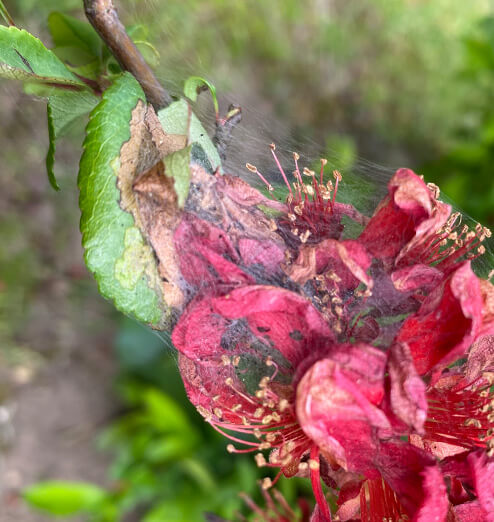
Release them immediately after hatching, preferably several times a season, see instructions for details.
As a result
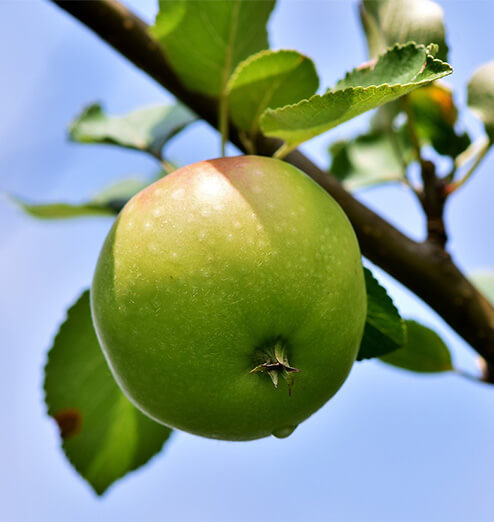
apples, plums, cherries, raspberries, peas, cabbages will be free of mealybugs, shrubs will be free of pesky nets and other pests in the garden will be limited.
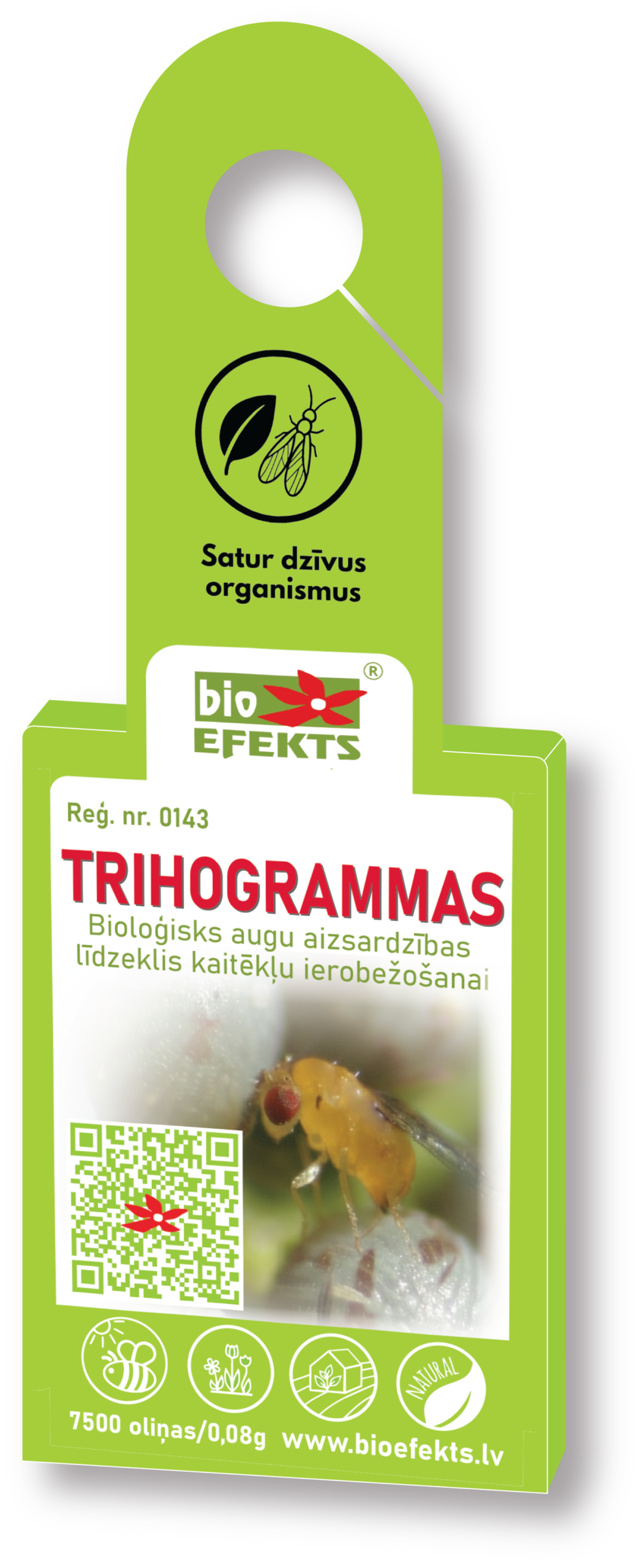
Packaging purchased
The packaging is immediately taken to the garden.
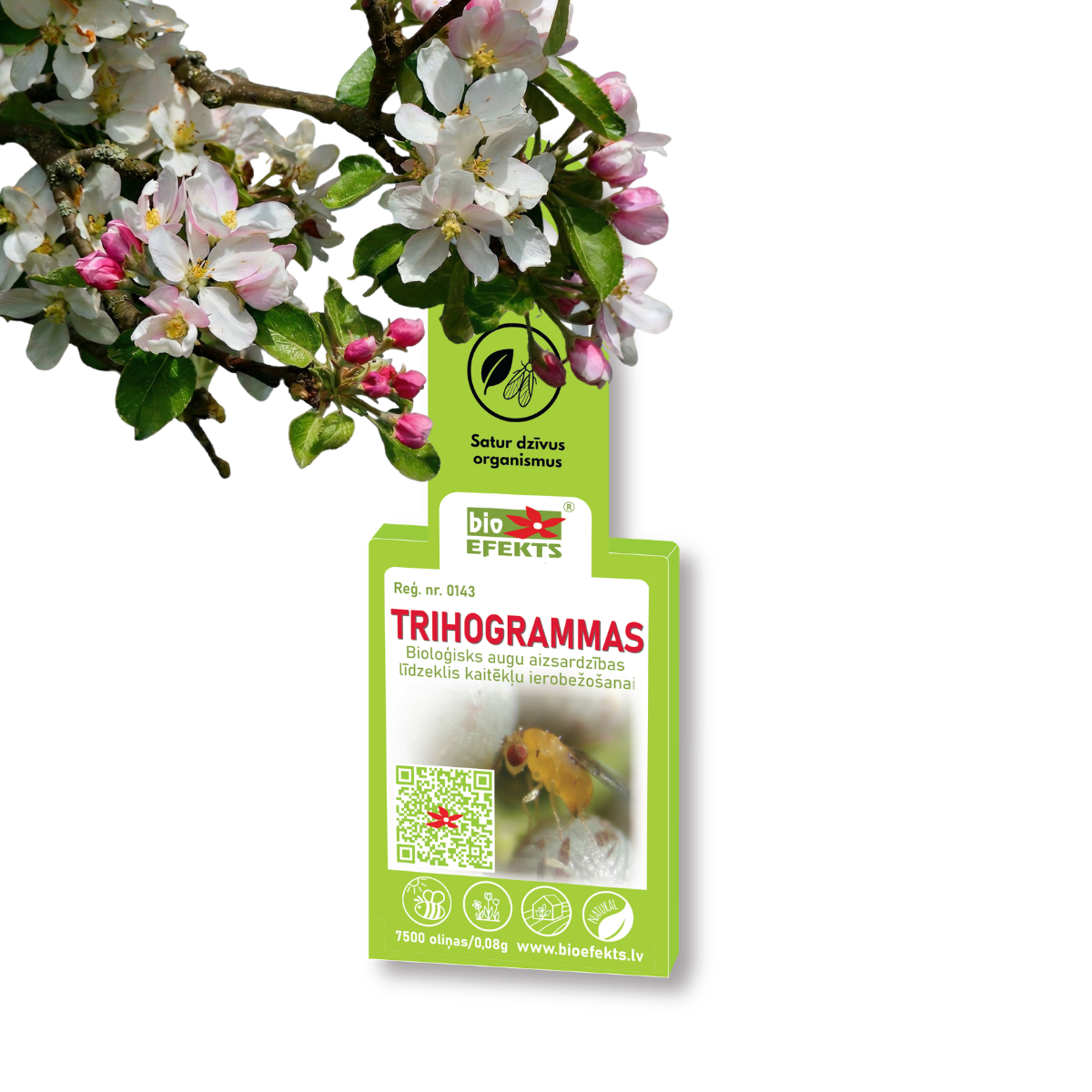
Hang in plants
Hang in 15-20cm from the ground or in the lower third of fruit trees.
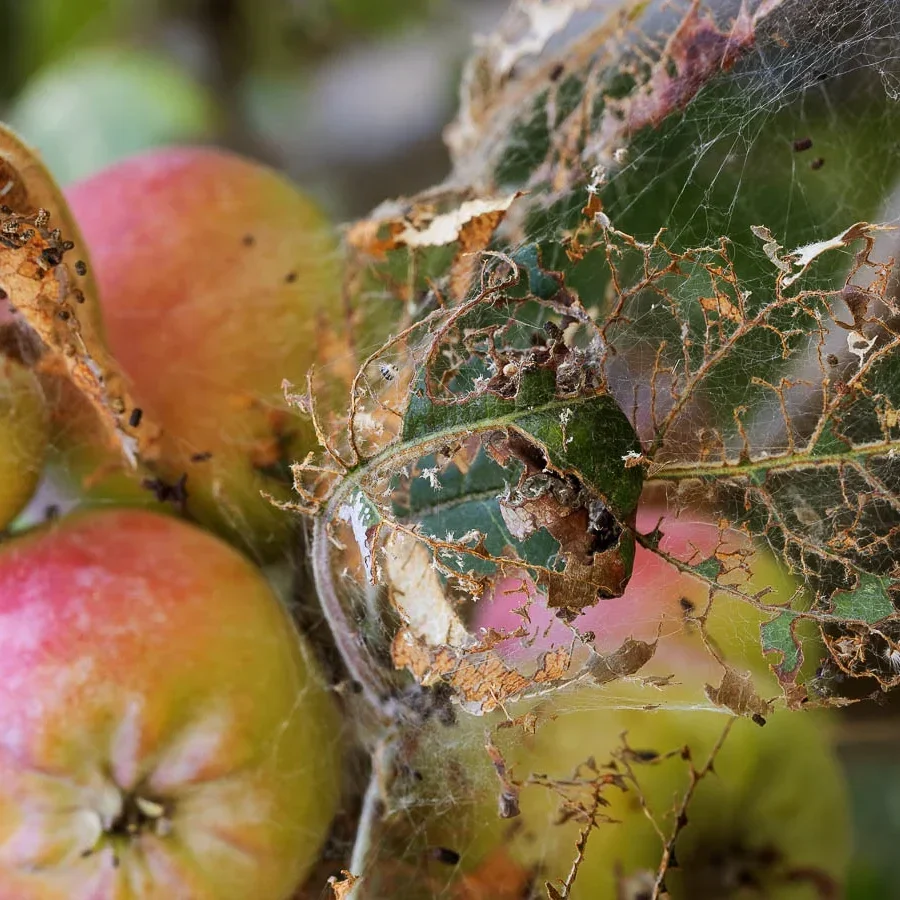
Trichogramma
Trichogramma will hatch and seek out pest eggs.

As a result
apples, plums, cherries, raspberries, peas, cabbages will be free of mealybugs, shrubs will be free of pesky nets and other pests in the garden will be limited.
You can pick up your order:
AT OUR STORE, Salaspils, Līvzemes Street 30 - free of charge
- Weekdays from 9:00 to 17:00.
- Orders placed before 11:00 can be collected the same day from 15:00. Orders placed after 11:00 can be collected the next working day.
- Order confirmation must be presented upon receipt.
IN AN OMNIVA PARCEL MACHINE
Latvia - 2,49 €
Lithuania, Estonia - 4,24 €
- Delivery time - 2 to 5 working days.
- Next working day delivery to the parcel office.
- Delivery times may be longer during promotions.
DELIVERY WITH COURIER throughout the Baltics - from 5.70 €
- 3-9 working days depending on delivery address.
- The price depends on the delivery address.
To ensure delivery as soon as possible, please provide the exact delivery details in your order.
Related products
Biokomposter – dry concentrate
- Speeding up composting
- Improves the microbiological quality of compost
- Restore the soil
- Removes odour in dry toilets
Biokomposter – for incorporation into soil
- Accelerates the composting process
- Improves the microbiological quality of compost
- Prevents unpleasant odours during composting
- Reduces odour in dry toilets
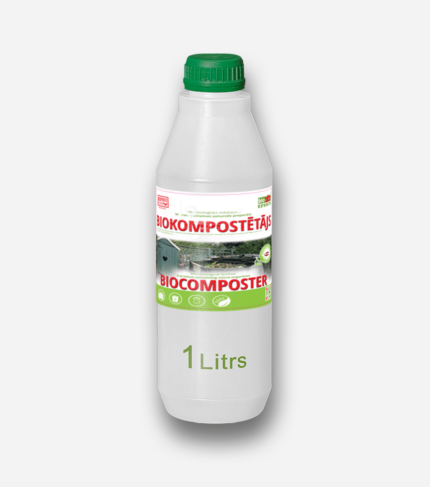
Biokomposter – liquid concentrate
- Accelerates the composting process
- Improves the microbiological quality of compost
- Prevents unpleasant odours during composting
- Reduces odour in dry toilets
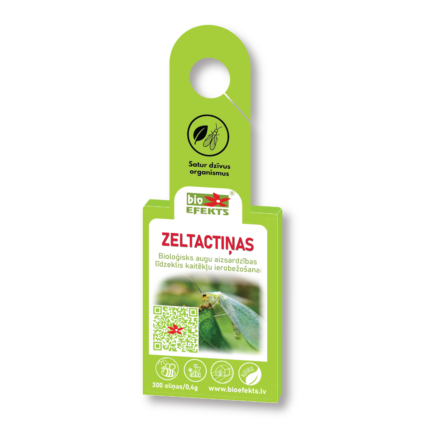
Goldenrod – plant protection
- Controls aphids, webworms, soft bugs, thrips, whiteflies, Colorado potato beetles, lepidopteran pests
- Safe for humans, animals, nature
- Also authorised for use on organic farms
- Not for home storage PLACE IN THE GARDEN IMMEDIATELY AFTER RECEIPT!

Reviews
There are no reviews yet.